
Graphic by Rita Pasiewicz
The Sustainable Development Goals are nowadays quite a popular topic, with the term being used quite a bit in a variety of contexts and situations. However, it is often not exactly clear what these goals truly entail, and how they are measured.
The SDGs are part of the 2030 Agenda for Sustainable Development created by the United Nations and adopted in 2015. They replaced the Millennium Development Goals, which were planned to be implemented and achieved between the years 2000 and 2015.

The Millennium Development Goals
While it is certain that not all of these goals have been completely achieved (as indicated by the fact, for instance, that extreme poverty still exists) there is no doubt that humanity has made great progress between the years 2000 and 2015. According to the article “How successful were the millennium development goals?” published by The Guardian in 2017, about 21 million lives were saved due to “accelerated progress”, and about 471 million individuals “have been lifted out of extreme poverty”. However, it is naturally difficult (in fact, almost impossible) to tell how much of this was a result of direct action in relation to the MDGs; for instance, global extreme poverty rates were already falling incredibly swiftly even before the year 2000.
The Sustainable Development Goals, following in the footsteps of the MDGs, have set even more ambitious targets – with 17 goals in total!
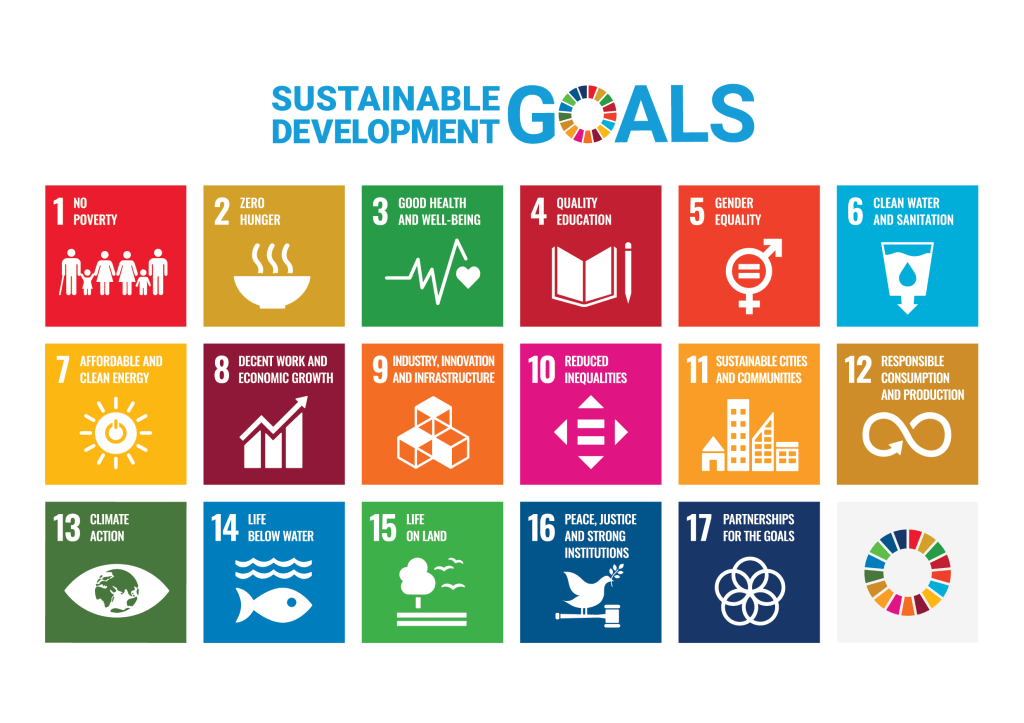
The Sustainable Development Goals
So, with all of these goals, one may be curious as to how they are measured, and the progress of individual countries towards accomplishing these goals evaluated. Each goal is comprised of several targets, with each target having one or more indicators assigned to it. Goal 4 (Quality Education), for example, has 10 targets, such as “By 2030, ensure that all girls and boys complete free, equitable and quality primary and secondary education leading to relevant and effective learning outcomes” (Target 4.1) and “By 2030, substantially increase the number of youth and adults who have relevant skills, including technical and vocational skills, for employment, decent jobs and entrepreneurship” (Target 4.4).
One might expect the world to be firmly committed towards achieving at least some of these aims and thus helping humanity prosper. This is sadly not the case.
2023 is a very special year for the Sustainable Development Goals. More specifically, it is the halfway mark for the SDGs, as the goals were introduced in 2015, and are designed to be achieved by 2030 at the latest. However, the situation looks somewhat bleak. According to a UN report, only 15% of the measurable targets are on their way to being achieved by 2030, and 48% of the targets are not following the “desired trajectory” and exhibiting “moderate or severe deviations” from it. Even worse, 37% of the targets have not shown any progress, with some indicators even falling below the 2015 level – a shockingly high percentage. This means that the number of targets that are currently failing almost completely is more than twice the number of targets that are being met!
Many factors have naturally contributed to this issue. The COVID-19 pandemic, global economic challenges, and events such as the Russian Invasion of Ukraine have certainly all played a part in setting back the progress towards achieving the goals. However, these are not the main reasons for the abysmally low “15%” (in terms of targets being achieved). There are several key problems with the 2030 Agenda, yet two are perhaps the most obvious – lack of obligations and lack of funding. With insufficient money to achieve the goals, and governments not being forced to adopt them, it would actually be surprising if our world was not falling behind.
However, not all is doom and gloom, and some success was naturally seen. Infant mortality rates continued to fall since 2015, and the number of individuals with access to information and communications technology grew steadily. That being said, more effort must definitely be put in to help achieve the SDGs.
As the younger generation, it is also our duty to do our best to ensure that these goals are accomplished, if not by 2030, then very soon after. After all, this is our future we are creating. Knowing about these goals is the first key step to making sure that they are achieved; more steps can follow. There is quite a lot that school and university students can accomplish, with programs existing to help them do just that.




 The Warsaw High School Times
Leave a comment