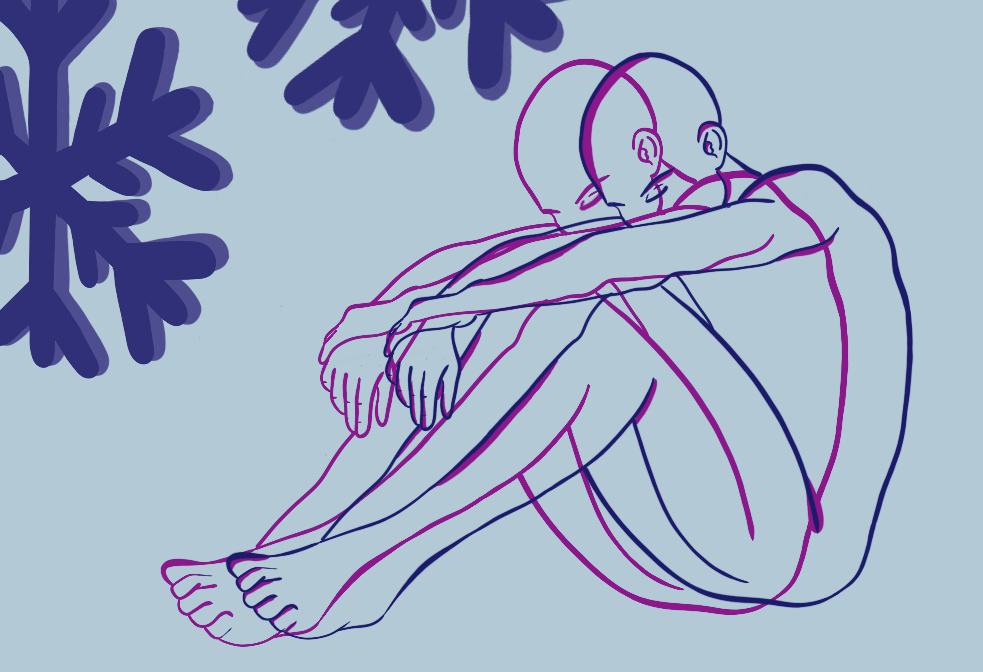
Graphic by Rita Pasiewicz
There is probably nobody who has not stated (at least once) that they are feeling “down” recently. The cold and bitter weather outside as well as the season itself can harm our mood, with symptoms such as sadness, gloom, irritability and discouragement. While fewer and fewer things bring us joy and our emotions make it difficult for us to function in everyday life, it is good to check whether we are not dealing with seasonal depression (also commonly called “autumn” or “winter” depression). However, there are many people among us for whom “winter depression” can turn into a huge, real, and very dangerous problem.
Importantly, seasonal depression should not be confused with the “blues” or “winter blues”, which occur to almost everyone who does not care for the cold and rainy part of the year.
Seasonal depression is a real issue – a condition classified as an affective disorder, although not listed as a separate entity in the ICD-10 classification, but included in the group of recurrent depressive disorders (F33.9). The relationship between well-being and the amount of sun in the colder months of the year was noticed by researchers already in antiquity and the Middle Ages. In his book “Winter Blues”, Norman E. Rosenthal mentions Aretaeus of Cappadocia, who recommended that “lethargics are to be laid in the light, and exposed to the rays of the sun for the disease is gloom.” In the 1820s, a French psychiatrist Esquirol described the case of a man with symptoms of depression that recurred in the winter months. The doctor recommended trips to Italy and Languedoc in the autumn and winter, which was supposed to help the symptoms of the disease disappear. Although the concept of seasonal depression has occurred since antiquity, it was given its name only in the 20th century.
Seasonal depression is a commonly used term referring to Seasonal Affective Disorder (SAD). Seasonal affective disorder most often appears in autumn or at the turn of autumn and winter, and disappears in spring or summer.
The causes of seasonal depression have not yet been thoroughly investigated. It is most likely related to the brain’s excessive secretion of melatonin (the so-called sleep hormone) in autumn and winter, which might result in the inappropriate secretion of serotonin responsible for our mood.
Seasonal depression – what symptoms should we be alarmed by?
The symptoms of SAD are very similar to those of typical depression. It is always worth contacting your doctor if any of the following symptoms persist for more than 2 weeks:
– Constant feeling of sadness
– Loss of interest (lack of enjoyment of favorite activities)
– Fatigue, lack of energy
– Change in appetite (decreased or increased)
– A constant or recurring feeling of anxiety or excitement
– Sleep disturbances (insomnia or ability to sleep all day)
– Loss of self-esteem.
What are the best ways to deal with seasonal depression?
SAD is a real health problem that only a doctor can assist with. After your doctor interviews and examines you, he will be able to offer you the most effective treatment method. The most frequently recommended therapeutic methods are:
– Psychotherapy. Regular therapy or even a few meetings with a psychologist can help you accept the disease and learn how to deal with troublesome symptoms. It will help you learn more about yourself, the actual causes of poor health, and possible ways to solve this problem.
– Aromatherapy. Essential oils (used in a fireplace or an aroma diffuser) will not cure SAD, but they can significantly improve your mood.
– Sports. Movement, especially outdoors, releases endorphins and serotonin, improves fitness, affects the nervous system, and oxygenates the body. Physical exercise also reduces stress. To improve your experience, you can find your favorite sport that gives you pleasure.
– Diet. Reach for complex carbohydrates, which stimulate the brain to produce the happiness hormone – serotonin. Oat flakes, muesli, whole grain pasta, groats, and bread – all these foods will provide you energy and a feeling of satiety for a longer time. Don’t forget about vegetables! Some of the ones you could add to your shopping list are: spinach, brussels sprouts, brown rice, shelled sunflower seeds, beans, buckwheat, and dried fruit. Omega-3 fatty acids are also important, as they prevent depression and are one of the building blocks of nerve cells. These acids can be found in linseed and linseed oil, rapeseed oil, chia seeds, peanuts, sea algae, and fatty sea fish. Do not forget about your dessert, e.g. a bar of chocolate, which contains magnesium and undeniably improves the mood of many people.
– Regular circadian rhythm. Do not change your circadian biological clock or artificially extend your sleeping hours. Keep the rhythm you follow during the other months of the year.
– Phototherapy (bright light therapy). Phototherapy involves exposing the skin to a special lamp with high light intensity. This is a very effective method, but time-consuming – to achieve your awaited results, exposure is usually needed at least 2-3 times a week.
– Pharmacological treatment. The symptoms of seasonal depression are alleviated by the use of antidepressants. New-generation drugs are not addictive and can be safely taken, for instance, for half a year. However, it is best to consult a medical professional first.
– Treat yourself! Long evenings are perfect for catching up on reading and movies, as well as drinking delicious and soothing cocoa.
In Poland, seasonal depression affects up to 7-10 percent of the population, but only a small percentage is treated – due to lack of awareness, shame, or lack of time. Remember – if something about your well-being worries you, do not hesitate and make an appointment with your doctor. If you are afraid of face-to-face contact with one, or your busy schedule at school or work does not allow you to make an appointment, you can always use convenient online consultations. It is also important that you look out for your loved ones – if you notice that any of the symptoms of SAD occur to them, act quickly and inform them about what you’re suspecting.




 The Warsaw High School Times
Leave a comment