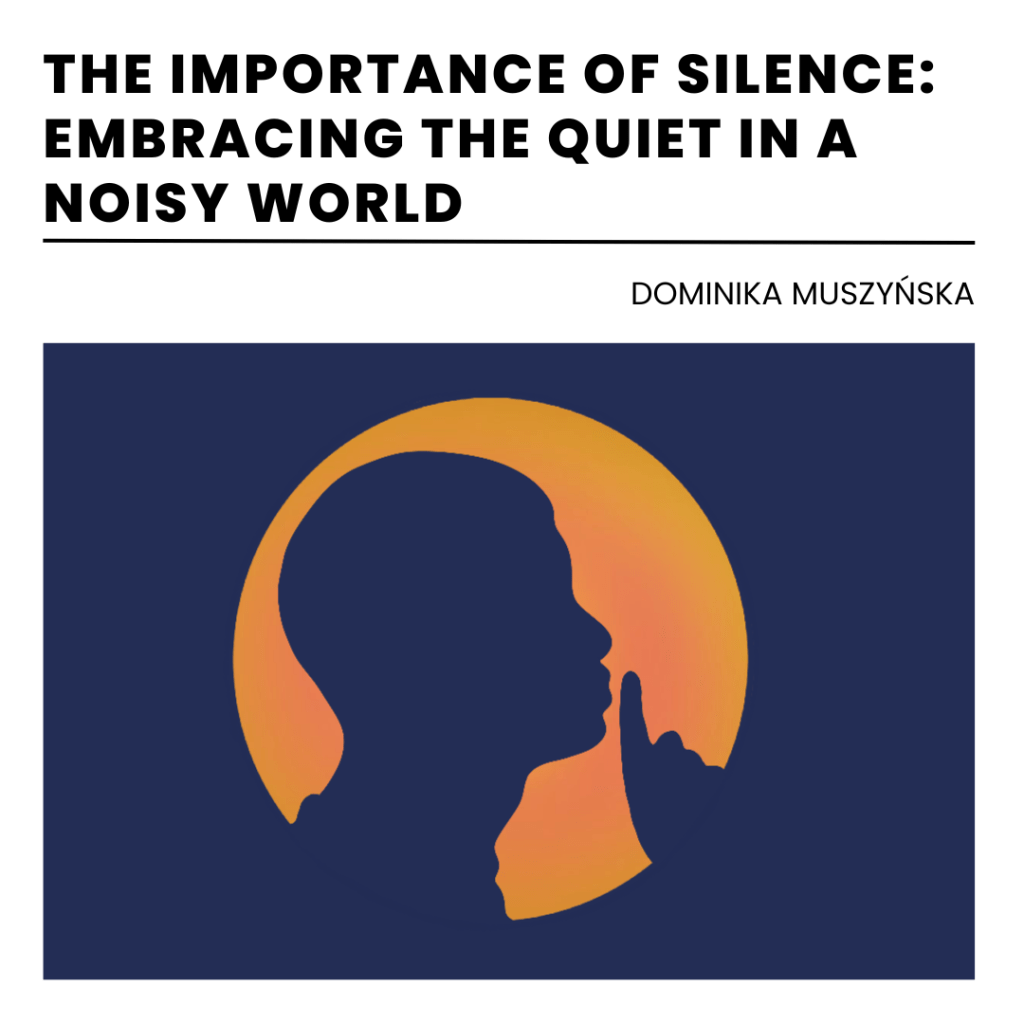
Dominika Muszyńska
In an era defined by constant connectivity and a cacophony of information, the significance of silence often gets overshadowed. Yet, the tranquility found in moments of quietude can have profound effects on both our psychological and physiological well-being.
Psychological Impact:
In the hustle and bustle of modern life, silence emerges as a powerful remedy for the cognitive fatigue induced by a constant barrage of stimuli. The human brain, when exposed to a relentless stream of information and noise, can experience cognitive overload, leading to heightened stress levels. This chronic stress not only affects our mental well-being but can also manifest physically, contributing to ailments such as headaches and fatigue.
The absence of external disturbances in moments of silence becomes a sanctuary for our minds, allowing them to unwind and recharge. This respite from the incessant demands of daily life enhances cognitive functions such as concentration, creativity, and problem-solving skills. Research indicates that individuals who incorporate periods of silence into their routines often exhibit improved memory retention and increased productivity.
Moreover, silence serves as a crucial antidote to the ubiquitous digital barrage that characterizes our interconnected world. The constant influx of social media notifications, emails, and the incessant beeping of electronic devices contributes significantly to the heightened sense of anxiety prevalent in society. For example, a study conducted by the University of California, Irvine, revealed that constant exposure to email notifications can lead to elevated stress levels, impacting both mental and physical health.
Embracing silence in this context becomes more than a luxury; it transforms into an essential practice for disconnecting from the digital noise. Creating intentional spaces for silence offers a mental respite, providing room for self-reflection and fostering a sense of inner calm. By consciously stepping away from the digital realm, individuals can gain a clearer perspective on their thoughts, emotions, and priorities.
Consider the example of a weekly digital detox, where individuals deliberately disconnect from their devices for a specified period. This intentional silence not only alleviates the mental strain associated with constant connectivity but also allows individuals to engage in activities that promote well-being, such as reading, meditation, or simply enjoying nature.
The psychological impact of silence goes beyond a mere break from noise; it becomes a strategic and necessary component of maintaining mental and emotional equilibrium in a world inundated with information. By recognizing and embracing the benefits of silence, individuals can not only enhance their cognitive abilities but also foster a healthier relationship with the digital landscape, promoting a more balanced and fulfilling life.
Physiological Benefits:
Beyond its psychological effects, the impact of silence on our physiological well-being is profound, offering a range of benefits that extend from stress reduction to cardiovascular health.
Chronic exposure to noise pollution has been associated with a myriad of health issues. Elevated stress levels, disrupted sleep, and an increased risk of cardiovascular problems are among the consequences of living in environments saturated with constant sound. Research conducted by the World Health Organization (WHO) has established a clear link between long-term exposure to noise and adverse health outcomes, emphasizing the need for interventions to mitigate its impact.
In contrast, moments of silence act as a powerful countermeasure to the physiological toll of noise. When we intentionally seek out quiet spaces, a relaxation response is triggered in the body, leading to a decrease in cortisol levels – the hormone associated with stress. This reduction in stress hormones not only contributes to an immediate sense of calm but also plays a crucial role in long-term health outcomes.
Consider the example of a study conducted at Massachusetts General Hospital, which demonstrated that patients exposed to natural sounds, including moments of silence, during their recovery experienced lower stress levels and faster healing compared to those subjected to constant noise. The physiological benefits were evident not only in reduced stress markers but also in measurable improvements in immune system function.
Silence, acting as a natural stress reliever, exerts its influence on the autonomic nervous system. In the presence of silence, the body is prompted to shift from the ‘fight or flight’ response, associated with heightened stress and alertness, to the ‘rest and digest’ state. This transition is crucial for promoting physical restoration, optimizing digestion, and supporting overall healing processes within the body.
Creating a serene environment by incorporating silence into our daily lives, whether through meditation, mindful breathing exercises, or spending time in quiet natural settings, becomes a proactive strategy for enhancing our physiological well-being. Regular exposure to silence not only aids in reducing the risk of stress-related illnesses but also contributes to improved sleep quality, enhanced immune function, and better cardiovascular health.
Understanding the physiological benefits of silence emphasizes its pivotal role in maintaining overall health. By acknowledging the link between chronic noise exposure and health issues, individuals can actively seek out and incorporate moments of silence into their routines. This intentional pursuit of quietude serves as a powerful tool for promoting physical restoration, reducing stress, and fostering long-term well-being.
Navigating Overstimulation:
In a contemporary society characterized by perpetual connectivity and a ceaseless influx of information, intentionally integrating silence into our daily lives emerges as a paramount strategy for combating the pervasive issue of overstimulation. The relentless assault on our senses from digital devices, social media, and constant external stimuli necessitates proactive measures to safeguard our mental and emotional well-being.
- Mindfulness and meditation:
- These techniques encourage individuals to embrace the present moment, fostering a heightened awareness of thoughts, sensations, and emotions. By dedicating time to mindfulness exercises, whether through guided meditation apps or traditional practices, individuals can create mental spaces that are impervious to the constant barrage of information, thereby nurturing a sense of inner calm and focus.
- Unplugging from digital devices for designated periods:
- Establishing tech-free zones in one’s routine allows for a respite from the demands of constant connectivity. For instance, designating specific hours of the day as “device-free” or implementing a regular digital detox weekend can significantly contribute to mitigating the adverse effects of overstimulation. This intentional disconnection provides an opportunity for the mind to recalibrate, reducing the risk of burnout and enhancing overall cognitive resilience.
- Physical environment:
- It plays a crucial role in navigating overstimulation. Cultivating silent spaces in various settings, whether at home, in nature, or within urban environments, becomes a strategic means of creating havens for recuperation. For instance, dedicating a corner of the home as a quiet reading nook or seeking out serene natural spaces for periodic retreats can offer refuge from the constant noise pollution prevalent in our daily lives.Urban planners and architects are increasingly recognizing the importance of designing public spaces that prioritize silence. Initiatives like “quiet zones” in urban parks or the integration of sound-absorbing materials in public spaces contribute to creating environments conducive to mental well-being. The incorporation of silent spaces in our surroundings acknowledges the necessity for intentional breaks from overstimulation, promoting a healthier and more balanced lifestyle.
The intentional incorporation of silence is a multifaceted strategy for navigating overstimulation. By embracing mindfulness and meditation practices, adopting intentional technology breaks, and cultivating silent spaces in our surroundings, individuals can proactively counter the detrimental effects of information overload. This deliberate pursuit of silence not only safeguards mental and emotional well-being but also empowers individuals to reconnect with themselves and the world in a more meaningful and fulfilling way.
Utilizing Silence for Personal Growth:
Silence, often misconstrued as a mere absence of sound, emerges as a powerful and transformative tool for personal development. Embracing the quiet moments in our lives serves as a gateway to profound introspection, allowing individuals to delve into the depths of their thoughts, emotions, and desires.
In a world dominated by constant stimuli and an unrelenting pace, intentional pauses for silence become a revolutionary act of self-care. Society’s pervasive glorification of busyness has led to a collective neglect of the crucial role silence plays in fostering self-awareness and personal growth. Amid the clamor of daily life, deliberately incorporating moments of quietude provides a sanctuary for self-discovery.
One facet of utilizing silence for personal growth is the cultivation of mindfulness. Mindfulness practices, such as meditation or mindful breathing exercises, encourage individuals to observe their thoughts without judgment. By regularly engaging in such practices, individuals can develop a heightened awareness of their inner landscape, facilitating a deeper understanding of their motivations, fears, and aspirations.
Moreover, silence acts as a catalyst for emotional intelligence, a crucial component of personal development. The ability to navigate and understand one’s emotions, as well as empathize with the emotions of others, is enhanced through regular exposure to silence. For instance, taking a few minutes of quiet reflection after a challenging encounter or a stressful situation allows individuals to process their emotions more effectively, leading to improved emotional regulation and interpersonal relationships.
In the quest for personal growth, silence also nurtures resilience. The intentional practice of stepping back from the noise of external pressures and expectations provides individuals with the mental and emotional space to build resilience in the face of adversity. This resilience is not only beneficial for coping with stress but also for fostering a positive mindset and adaptive responses to life’s challenges.
Consider the example of successful leaders who attribute part of their accomplishments to the incorporation of silence in their routines. CEOs and entrepreneurs often highlight the role of solitude and contemplation in decision-making processes. Bill Gates, for instance, is known to take “Think Weeks” during which he disconnects from the outside world to reflect and strategize, emphasizing the value of silence in fostering clarity and innovation.
In a society that frequently associates productivity with constant activity, deliberately embracing silence becomes a revolutionary act of self-care and personal growth. By reclaiming control over mental and physical health through intentional pauses, individuals can navigate the complexities of modern life with a newfound sense of balance and purpose. In essence, the power of silence lies not only in its tranquility but in its ability to unlock the door to self-discovery, emotional intelligence, and resilience, ultimately contributing to holistic well-being and personal growth.
In conclusion, amidst the clamor of our fast-paced world, recognizing the importance of silence is pivotal for our holistic well-being. Both psychologically and physiologically, embracing moments of quietude offers a myriad of benefits. By deliberately weaving silence into the fabric of our lives, we not only combat the detrimental effects of overstimulation but also create space for personal growth, serenity, and a deeper connection with ourselves.




 The Warsaw High School Times
Leave a comment