It has been a month since this year’s Black History Month came to an end, but that does not mean we can just forget about it. The celebration of Black people and their accomplishments started almost a century ago, in 1926, when an organisation now known as ASALH (Association for the Study of African American Life and History) launched Black History Week in the second week of February. The date was not chosen at random. It honoured the birthdays of former United States president Abraham Lincoln and the renowned abolitionist Frederick Douglass. We know that Lincoln was born on February 2, and Douglass has chosen to celebrate his birthday on February 14 because one of the memories he had of his mother was her calling him “little Valentine.” Both men had made great contributions to liberating African Americans from slavery; thus, Woodson, a member of ASNLH, chose to honour them and their legacy. Fifty years after that, in 1976, a week of commemoration turned into a whole month of celebrating the African American community and their achievements.
You may be thinking, “Why would we celebrate it? There is no white history month.” It is true that there is no specific date to celebrate white people’s achievements; however it is the Black lives and stories that are often overlooked. White people tend to focus on their history, forgetting about the years of struggles that Black people had to go through. Black History Month is a time to remember the forgotten and honour the accomplishments that are so often disregarded and diminished. Here are just a few histories of influential African American people. Keep in mind that Black history is a wide topic, and I recommend you pursue your own research to find more inspirational personas.
Frances Harper (1825-1911)
Frances Harper was an abolitionist and a poet born on September 24, 1825. Her poems were first published in Frederick Douglass’ Paper in 1839. Her first book of poems was published six years later, in 1945. In 1950, she became the first woman to teach at Union Seminary in Wilberforce, Ohio. Two years later, she took another job opportunity and started teaching in Pennsylvania. During that time, she was a witness to the workings of the Underground Railroad and the movement of slaves towards freedom, which affected her poetry and her later work as an activist. Her oratory career started after new slavery laws were introduced in 1854. That was the beginning of her activism; she gave anti-slavery speeches that included her prose and poetry, combining the issues of racism, feminism, and classism. She stood for feminism and equal rights for all, including Black women. She was the vice president of the National Association of Colored Women in 1897. Frances continued working through her lectures and writing until her death in 1911.
Octavius V. Catto (1839-1871)
Octavius Catto was an African American teacher, civil rights activist, and organiser of one of the first American baseball leagues. After his success in the sports field with his Pythian Baseball club, which played both Black and, despite resistance, white teams, he moved on to politics. He immersed himself in the fight for civil rights amendments, including the Fifteenth Amendment, which granted voting rights for African American men. On Election Day, October 10, 1871, violence and murder flooded the streets when white thugs began to discourage Black men from voting. Catto was a victim of that day when Frank Kelly, a Democratic Party operative, shot him several times. The offender was never convicted of the crime he committed. Catto’s funeral was one of the biggest ceremonies in Philadelphia’s history. Octavius Catto died just because he was Black; as his epitaph put it, he was “One More Martyr in the Cause of Constitutional Liberty.”
James Baldwin (1924-1987)
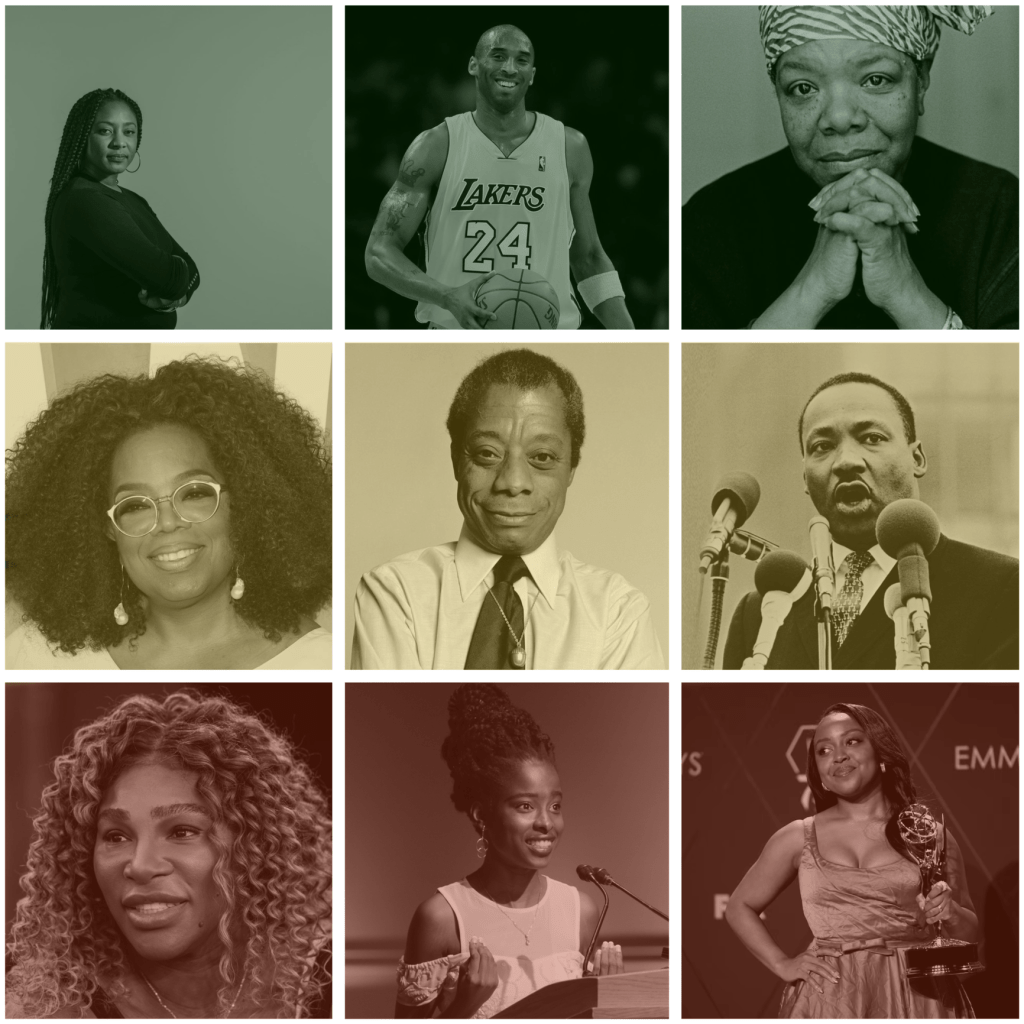
James Baldwin was an American writer and playwright born on August 2, 1924. He wrote many essays, novels, and poems revolving around social and political issues. After he moved to Europe, his work started to become more personal; he wrote about his background. “Once I found myself on the other side of the ocean, I see where I came from very clearly…I am the grandson of a slave, and I am a writer. I must deal with both,” Baldwin once told The New York Times. Baldwin was a bisexual man, and that part of him was explored in his later novels, such as “Giovanni’s room” 1954 and “Just above my head” 1978. He continued to break taboo subjects with his novel “Another country” (1962), which was about interracial relationships. He was open about his relationships with both men and women and didn’t approve of the binary point of view expressed in the U.S. In the 1970s the tone of his pieces became more strident after seeing so much hatred in the world caused by racial prejudice. He continued writing literature of many genres and died on December 1, 1987.
Martin Luther King, Jr. (1929-1968)
Martin Luther King, Jr. was born on January 15, 1929. He was a writer and an orator who appeared wherever there was injustice. He was the leader of many peaceful boycotts and marches for the sake of equality. He was the youngest man to have received the Nobel Peace Prize; he was named Man of the Year by Time magazine in 1963 and awarded many honorary degrees. His life was brutally murdered while he was doing what he was known for. He was supposed to lead a protest march in Memphis, Tennessee, but while standing on the balcony of his motel room, he was assassinated.
Chadwick Boseman (1976-2020)
Chadwick Boseman was born on November 29, 1976, in Anderson, South Carolina. He was an American actor, and during his career he received many awards, including an Academy Award nomination. His role in Black Panther created a community; the representation of Black people in the movie was groundbreaking and iconic in the world. Many Black people related to the story and used the Wakandan greeting. He assisted in Disney’s Black Panther’s film marketing campaign by helping to support the fundraising campaign and donated $10,000 of his own money to the Boys and Girls Club of Harlem to pay for children to see the Black Panther for free. Later, he encouraged Disney’s decision to donate $400 million to charitable causes. Just months before his death, on Jackie Robinson Day (April 15, 2020), the actor donated $4.2 million in personal protective equipment to hospitals servicing Black communities during the Covid-19 pandemic. He also worked with cancer charities, such as St. Jude Children’s Research Hospital, and was known to visit cancer patients, especially young children, while privately battling the illness himself.
Kobe Bryant (1978-2020)
Kobe Bryant was born on August 23, 1978, in Philadelphia. He was an American professional basketball player. In his 20-year career, he was an 18-time All-Star, a 15-time member of the All-NBA Team, a 12-time member of the All-Defensive Team, the 2008 NBA MVP (Most Valuable Player), and a two-time NBA Finals MVP. He made a difference not only on the court but also off it. After his retirement, he was an ambassador to many foundations and organisations. Mamba and Mambacita Foundation was founded in honour of him and his daughter; Kobe was an honorary chair for the United Way of Los Angeles’ annual HomeWalk aimed at addressing homelessness in LA County; he was a celebrity ambassador at After School All-Stars; he granted more than 200 wishes at the Make-A-Wish Foundation; he was a founding donor of the National Museum of African American History and Culture; he was a part of the 2012 broadcast for Stand Up to Cancer on a mission to raise money for cancer research; and he personally delivered messages to those facing cancer diagnoses. Bryant was also a spokesman for Aid Still Required, an organisation championing those often left behind after natural disasters and many, many more. He helped everyone. Sadly, he died in a helicopter accident on January 26, 2020.
Amanda Gorman (1998-present)
Amanda Gorman was born on March 7, 1998. She is a poet and an activist known for addressing topics such as Black identity, feminism, marginalisation, equality, education, and climate change. In 2013, Gorman became a youth delegate for the United Nations. Two years later, she self-published her first collection of poetry, “The One for Whom Food Is Not Enough.” In 2021, Gorman became one of only a handful of poets, including Robert Frost and Maya Angelou, to recite a poem at a U.S. presidential inauguration.
Black History Month is a time to reflect on the past and current lives of Black people in the world. We get to learn about their history and influences, which we often tend to forget. It is a great initiative that started almost a century ago, but we should educate ourselves on an everyday basis, not just when it is trending. I recommend you look for more Black stories that may inspire you and show you how much we owe them.

 The Warsaw High School Times
Leave a comment