By Antonina Cep
Designed by: Martyna Zbucka
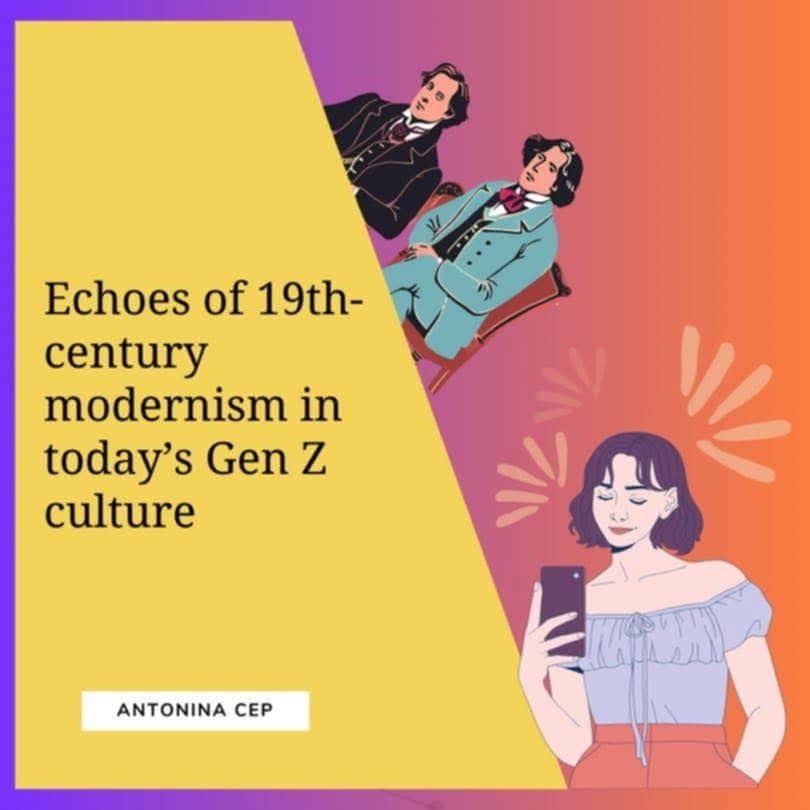
Decadence, often defined as a state of moral or cultural decline characterized by excessive indulgence in pleasure or luxury aimed at escaping reality, is a term that resonates with both the 19th-century modernist movement and the current attitudes of young people, especially Generation Z.
Surprisingly, while the two contexts are significantly different, there are striking parallels between these eras. The modernists of the late 19th century, struggling with rushing industrialization, upheaval of society, and existential despair, found relief in aestheticism, rebellion against societal norms, and an almost nihilistic approach to life. Many writers, artists, and thinkers of this period, such as Oscar Wilde, Charles Baudelaire, or Ernest Dowson, presented deep skepticism toward social moral norms, rejecting conventional values and embracing a hedonistic pursuit of art, beauty, and pleasure instead. In the modern world, Gen Z, a generation born into the digital age, faces a similarly fractured world, marked by climate anxiety, social polarization, and the overwhelming presence of technology. The decadent attitudes of 19th-century modernists almost mirror the behaviors and worldview of Generation Z, reflecting a cyclical pattern in cultural history.
The Decadents of the 19th century lived in a world at the edge of change. The Industrial Revolution had given way to existential crises about the purpose of humanity in an increasingly mechanized world. Similarly, Gen Z was born into an era defined by uncertainty, constant fear of the future driven by financial crises, political polarization, and of course the specter of environmental collapse.
Both groups have responded to these challenges with a pessimistic and nihilistic attitude and questions regarding traditional narratives of progress and the purpose of life. In the 19th century, Baudelaire captured this tendency with his iconic work Les Fleurs du Mal, showing the beauty of human suffering and decay. Today, this sentiment manifests in the spread of “doomscrolling,” a compulsive engagement with pessimistic news on social media, and the embrace of dark humor as a coping mechanism. Memes and jokes about existential dread, climate anxiety, and the absurdity of modern life have become cultural staples and a communal way of processing it.
The 19th-century Decadents sought escape in art, literature, aesthetics, and finding meaning in the fleeting beauty of life. Oscar Wilde famously once said that “One should either be a work of art or wear a work of art,” capturing in that sentence modernists’ embrace of aestheticism. In the modern world, Gen Z has adopted similar mechanisms, though their ways of expression are obviously very different. Social media platforms like TikTok and Instagram have become virtual galleries of some kind, where individuals are able to create their lives as aesthetic projects that often have nothing to do with reality. The trend of “core” aesthetics such as “cottagecore,” “dark academia,” and “romanticizing” every field of life reflects a yearning to create something meaningful through beauty and artistic self-expression. In the absence of guiding narratives – or the existence of an overwhelming number of them – these micro-aesthetics can offer a sense of identity and purpose, however fading.
Art played a central role in the lives of 19th-century Decadents, not only as an escape but as an act of resistance against societal conformity. Writers like Baudelaire created works that celebrated the unconventional, while painters like Gustave Moreau created dreamlike, symbolic visions in contrast to realism. Similarly, Gen Z has turned to art and creativity as both a refuge, escape, and way of expressing themselves. The resurgence of DIY culture and the rise of independent music reflect a rejection of mass-produced consumerism in favor of more personal and authentic forms of expression. Platforms like YouTube, SoundCloud, and TikTok have democratized artistic production, allowing small, young creators to share their visions without needing the approval of mass-produced corporations. Much like the Decadents, Gen Z values art for its ability to challenge norms and provide moments of beauty in this gloomy world and grim reality.
Another parallel between the Decadents and Gen Z is their shared focus on finding joy in the small, seemingly insignificant aspects of life. In À Rebours by another French decadent writer Joris-Karl Huysmans, the protagonist – Des Esseintes retreats from the world to create his private sanctuary – an ideal artistic world of his own, where he can indulge in his own eccentric, aesthetic taste – an extreme embodiment of the Decadent ideal. Today, this attitude exists in the rise of the idea of mindfulness, slow life, and the appreciation of “cozy” lifestyles like, for example, hygge.
While dealing with overwhelming global challenges almost every single day, many young people have embraced the idea that small acts, whether it’s making a cup of coffee, journaling, or houseplanting, can provide some kind of sense of control and comfort. These rituals, though they may seem trivial, can offer a balance to the chaos of daily modern life, much like the Decadents’ embrace of the “art for art’s sake” philosophy.
However, the Decadent attitude is not without its traps. In the 19th century, many criticized the movement for its moral decline and detachment from social responsibilities. And indeed, the Decadents’ hedonism often came at the expense of engagement with the world and ongoing life, leading some people to view them as apolitical or even self-indulgent.
This criticism, of course, could just as easily apply to certain aspects of Gen Z culture. The focus on aesthetics and individualism can be empowering; however, it can also sometimes lead to trivial and superficial territory. The rising commodification of mental health, self-care, and activism, driven by social media algorithms, risks reducing these incredibly important issues to mere trends. Besides, the emphasis on fleeting pleasures can sometimes distract people from the urgent need for collective action in addressing systemic problems like climate change and inequality.
Ultimately, the challenge for today’s young generation is to balance the decadent impulse for personal pleasure and aestheticism with a strong commitment to collective well-being and taking action; otherwise, the reality that we try to get away from will not change. That is why we cannot forget that the future is in our hands and we need to fight for it instead of just trying to escape it.


 The Warsaw High School Times
Leave a comment